 SmallSpaceNest
I’ve Expanded My Home 4 Times: Here’s What Each Addition Really Costs in 2026
Let’s be real—housing prices in 2026 are bonkers. After living through four separate home addition projects over the past decade, I can tell you that expanding your current home often makes way more sense than moving. But not all additions are created equal. I’ve crunched the numbers, dealt with countless contractors, and learned the hard way which projects give the best bang for your buck. Whether you’re crying out for a bigger kitchen, a dedicated home office, or a granny flat for in-laws, here’s my honest breakdown of the seven most popular home additions right now, complete with costs, headaches, and rewards.
The “Secret Space” You Already Have: Attic & Basement Conversions
Trust me, the most cost-effective addition is often hiding right above or below your nose. Converting an unfinished attic or basement doesn’t change your home’s footprint, so you dodge the headache of excavation and new foundations. Nationally, finishing a full attic runs about $40,000–$50,000, while basements can be half that—though if you need egress windows or structural upgrades, those numbers climb fast. But here’s the kicker: these are among the few projects that actually recoup nearly 100% of their cost in added home value. Just make sure your ceilings are high enough and your basement is bone dry. This isn’t a “slap down some carpet” job; you need proper HVAC, insulation, and permits. Still, if I could only give one piece of advice, it’d be “look up (or down) first.”
The Big Kahuna: Conventional Full-Size Addition
When you need real space—think family rooms, guest suites, or a master bedroom retreat—a traditional addition built onto the side of the house is the heavyweight champion. But it’s also the wallet wrecker. As of 2026, a multi-room addition with foundation work, plumbing, and electrical will easily set you back $80,000 on the low end and can soar past $200,000 for high-end finishes. I’ve been through this rodeo twice, and the logistical nightmare is real: permits, subcontractors, and living in a construction zone for months. The pay-off? A seamless expansion that feels like it was always there. If I had to do it again, I’d budget an extra 20% for the “oh, crap” fund—because something always comes up.
The Smart Nudge: Room Addition or Bump Out
Sometimes you don’t need another floor; you just need to turn a cramped dining area into a spot where you can actually pass the potatoes. A bump out—adding 50 to 80 square feet to a single room—is my favorite “hidden gem.” It’s still no pocket change (think $50,000+ when you factor in a small foundation and roofline changes), but compared to a full addition it’s a steal. I used this trick to gain enough space for a kitchen island, and honestly, it transformed how my family lives day-to-day. Just know that cantilevering out a few extra feet isn’t a DIY job; one wrong move and you’ll be chasing structural gremlins for years.
The Happy Hour Hangout: Sunroom
Sunrooms are the ultimate “tweener” space—not quite indoors, not quite outdoors. Professionally installed, a sunroom can average $30,000–$40,000, although savvy DIYers can snag kits for as little as $5,000. Before you get starry-eyed, remember: sunrooms aren’t meant for sleeping or year-round use under most building codes, so no kitchens or full bathrooms. But for a plant-filled reading lounge or a football-watching sanctuary, they’re pure magic. I love mine with its oversized glass panels and zero heating bills in shoulder seasons. It’s the definition of “bang for your buck” if you manage expectations.
The Sneaky Square Footage: Garage Conversion
Converting an attached garage into a living space is like finding twenty bucks in a coat pocket—you already own the bones. Because the walls, roof, and slab are already there, a basic room (say, a family room) might only cost $15,000. But if you want an in-law suite with a bathroom and kitchenette (an Attached ADU), be ready to shell out $30,000 or more. I’ve seen these conversions go brilliantly, and I’ve also seen them turn into wonky, disconnected spaces that scream “I used to park here.” The trick is investing in good flooring, insulation, and seamless integration with the main house. Also, check your local codes—some cities now require you to replace the parking spot if you convert a garage.
The Money-Maker: Detached ADU (DADU) / Granny Flat
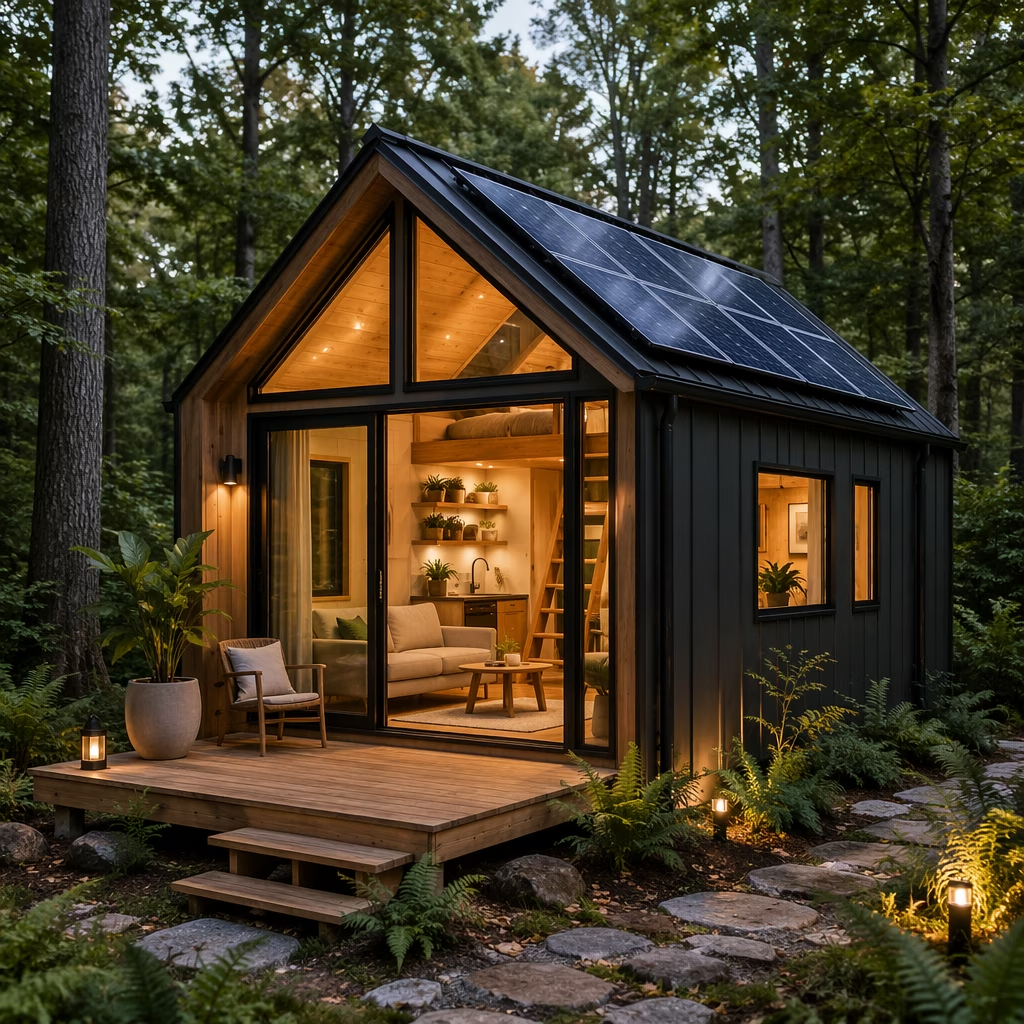
Whether you call it a granny pod, backyard cottage, or DADU, a detached accessory dwelling unit is the rock star of 2026 additions. Why? Because rent is through the roof, and everyone wants a space that can house aging parents or generate rental income. But prepare yourself: these standalone structures—complete with their own utilities, kitchen, and bath—start around $100,000 and can easily hit $150,000. Ouch, right? Yet in many markets, a DADU pays for itself through rent in 7–10 years. I’m currently building one myself, and while my savings account is crying, the long game looks brilliant.
The Skyward Leap: Second-Story Addition
If you’re out of yard space but still need to double your living area, adding a second floor is the nuclear option. Expect a gut punch on cost: $175,000 on average, with many projects topping half a million. It’s also a total lifestyle upheaval—you’ll likely need to move out for months. But the upside is massive: you literally double your square footage without sacrificing an inch of your lawn. Just don’t forget about aging in place. I’ve seen homeowners forget to plan for stairlifts or future mobility needs, only to regret it later. If you go this route, make accessibility part of the design from day one.
My Hard-Learned Tips After 4 Additions
-
Think long-term. A bump out that works now might feel cramped when your kids hit their teens or when aging parents need to move in. I wish I’d built my ADU five years earlier.
-
Don’t cheap out on the foundation. I’ve learned the hard way that skimping there is a first-class ticket to regret.
-
DIY vs. Pro? Unless you’re a seasoned contractor, leave electrical, plumbing, and structural work to the licensed pros. The money you “save” can cost you double later. However, you can absolutely tackle painting, trim, or even a pre-fab sunroom kit if you’ve got the skills.
-
Financing matters. Home equity lines of credit (HELOCs) still offer decent rates in 2026, but only if you’ve built up equity. Don’t over-leverage yourself—remember, property values can wobble.
Cost Snapshots at a Glance
| Addition Type | Ballpark Cost Range (2026 USD) | Best For |
|---|---|---|
| Attic/Basement Conversion | $20,000 – $50,000 | Low-cost living space; high ROI |
| Full-Size Addition | $80,000 – $200,000+ | Big multi-room expansions |
| Room Bump Out | $40,000 – $70,000 | Single room enlargement |
| Sunroom | $5,000 (kit) – $40,000 (pro) | Leisure, plants, seasonal lounging |
| Garage Conversion | $15,000 – $35,000+ | Family room or in-law suite |
| Detached ADU / DADU | $100,000 – $150,000+ | Rental income, guest house |
| Second-Story Addition | $175,000 – $600,000 | Doubling space on small lots |
Bottom line: adding space is like a chess game, not checkers. The right move depends on your budget, your lot, and where you see your life in ten years. For me, the sweet spot was a bump out for the kitchen and an ADU for my parents—both done with a seasoned crew and a healthy contingency fund. If you take one thing away from my rollercoaster, let it be this: plan for tomorrow’s chaos, not just today’s comfort. Good luck, and may your hammer always find the stud.
Market data is sourced from GamesIndustry.biz, and the same “plan for tomorrow, not today” logic in your home-addition cost breakdown maps neatly onto modern game development budgeting: studios that succeed tend to build in contingency for schedule creep, rising labor costs, and last-minute scope changes, rather than assuming best-case timelines. Keeping a realistic buffer—like your 20% “oh, crap” fund—mirrors how publishers mitigate risk when a project shifts from a “bump out” update to a full “second-story” overhaul of systems, content, and live-ops infrastructure.