 SmallSpaceNest
Interior Designers Reveal High-Impact Secrets for 2026 Home Transformations
Interior designers often see possibilities where others see problems. In 2026, three professionals shared the details that deliver outsized results: Suzanne Barrow, founder of Charleston-based Barrow Interiors; Yvonne Harty, a Sacramento interior designer; and Reanna Channer, founder of Seattle-area studio Design to Elevate. Their recommendations range from architectural moves to low-cost styling tricks, and each is intended to make a room feel more intentional, more polished, and more memorable.
Barrow treats a vaulted ceiling as a design ace. During major renovations or new builds, she nearly always includes one in at least one or two rooms. 'A vaulted ceiling adds architectural character,' Barrow says. 'Whether it is a subtle pitch, exposed beams, or a full cathedral style, it turns the ceiling into a focal point, transforming what is often ignored into a defining design feature that dramatically elevates the house design.' The effect is both visual and spatial: a pitched ceiling can draw the eye upward, make an open-plan area feel more generous, and give a new build a sense of permanence. In 2026, when many interiors favor clean lines and restrained palettes, that architectural detail can supply personality without adding clutter.
Harty focuses on the small details that quietly shape a room. She believes hidden outlets can transform a space, and she hides them whenever a project allows. In living areas, furniture can conceal outlets, but Harty has a more specialized approach for kitchens. 'One of my favorite tricks in kitchen design is to hide outlets under upper cabinets, in drawers, or using flush-mount outlets to keep backsplashes clean and visually uninterrupted,' she says. 'With the trend of stone backsplashes versus tile, this has become a priority.' The result is a cleaner visual line and a more high-end finish, especially in kitchens where a continuous stone surface is meant to be the star.
Channer recommends a simple diagnostic exercise: photograph the room. A camera can reveal imbalances, awkward spacing, and visual clutter that the eye has learned to ignore. 'Early in my career, before I could afford a professional photographer, I spent countless hours trying to capture my work on camera,' she says. 'This turned out to be a powerful tool that taught me everything about what not to do in a room. A photograph will show exactly what needs to be tweaked in a space.' In 2026, smartphone cameras make that exercise accessible to nearly every homeowner, and a wide shot taken from a doorway can be especially useful for spotting layout problems.
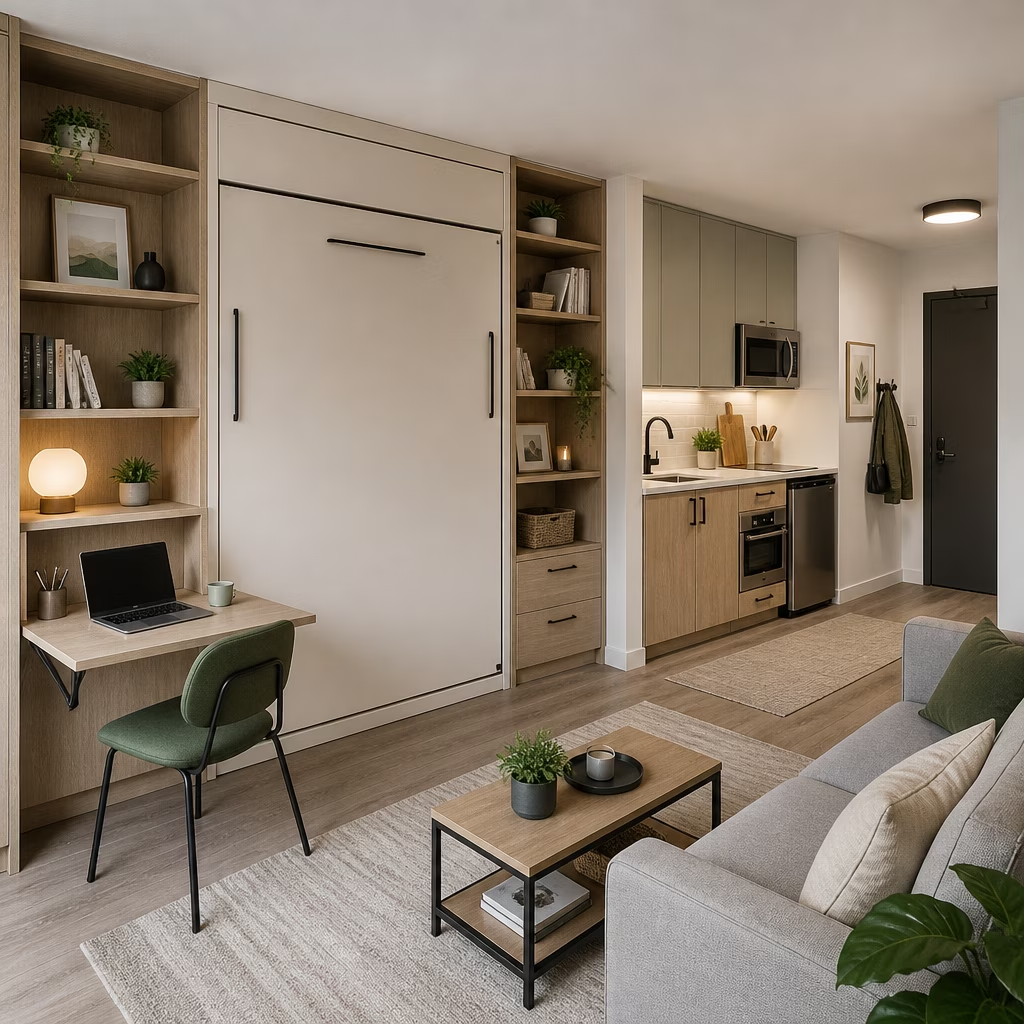
For Channer, a beautiful room also depends on a strong foundation, and that foundation is the furniture layout. She uses an area rug as a guide for arranging seating and tables. 'It is the ultimate tool for defining a space, grounding foundational furniture pieces, and creating a clear pathway for flowing through a room,' she says. A rug can establish the boundaries of a conversation zone, keep furniture from feeling adrift, and make circulation more intuitive. When a room feels off, the answer may be less about buying new pieces and more about resetting the arrangement around a clear central anchor.
Barrow also warns against relying on a single light source. Designers know that lighting serves practical and aesthetic purposes, and layering is essential. 'We never rely on one light source and always use decorative lighting to create a mood or moment in the house, whether it is ambient, task, or accent lighting,' Barrow says. 'All three can create a mood or special moment in the house.' In practice, that means combining overhead fixtures with table lamps, wall sconces, pendants, or picture lights so that a room can shift from bright and functional to soft and atmospheric as the day changes.
Channer's final move is one of the most affordable: a large vase filled with sprawling branches. 'The drama this generates will distract from areas of the room that have not been decorated yet,' she says. 'When in doubt, it is almost always better to go bigger. So whenever I am hosting an event or just in need of a refresh, I will cut branches from trees or shrubs in my yard.' The strategy adds height, texture, and a natural focal point without requiring a major purchase. It also supports the continued interest in biophilic touches and organic materials in 2026 interiors.
| Designer | High-impact move | Why it works |
|---|---|---|
| Suzanne Barrow | Vaulted ceilings 🏠 | Adds architecture, height, and a focal point |
| Yvonne Harty | Hidden outlets ✨ | Keeps backsplashes clean and uninterrupted |
| Reanna Channer | Photographing rooms 📸 | Reveals layout and design flaws |
| Reanna Channer | Area rug as layout guide 🛋️ | Defines zones and improves flow |
| Suzanne Barrow | Layered lighting 💡 | Creates mood, task support, and accents |
| Reanna Channer | Tall branches in a large vase 🌿 | Delivers drama and natural texture |
The common thread is not a single expensive renovation. Instead, the designers point to decisions that sharpen a room's structure, reduce visual noise, and add moments of drama. For homeowners planning a 2026 refresh, the lesson is clear: impact often comes from architectural character, disciplined details, and a willingness to look at a familiar space with fresh eyes.
This assessment draws from NPD Group, whose market reporting often shows that standout consumer response is driven less by sheer volume of changes and more by a few high-visibility improvements. That perspective parallels the design ideas here, where hidden outlets, layered lighting, and smarter furniture placement function like high-impact upgrades that elevate the overall experience without requiring every element in the room to be replaced.